Characteristics Of Effective Learning
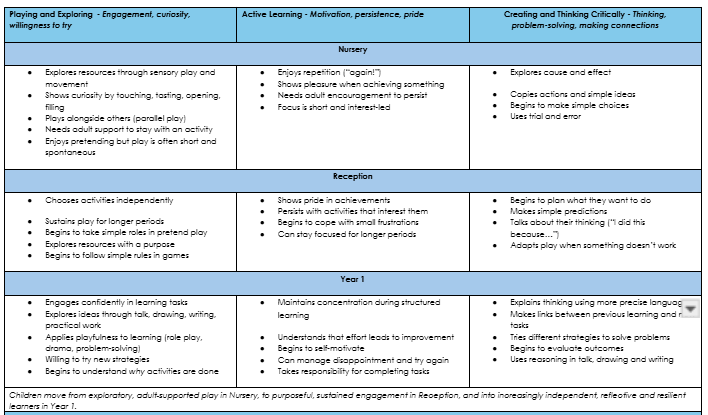
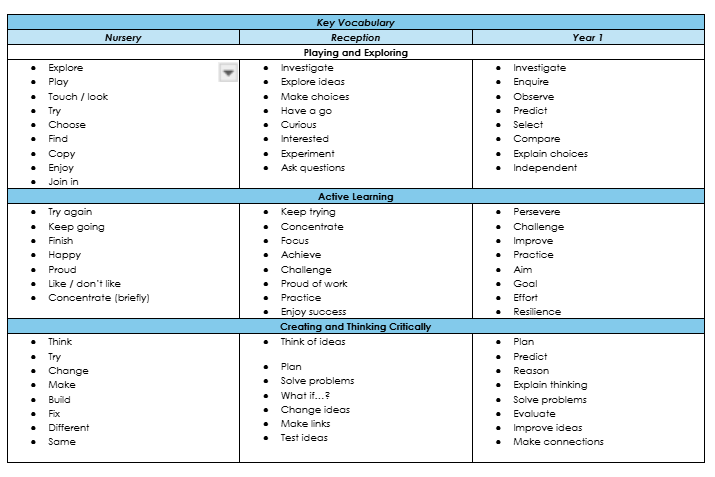
At Beaconside Primary and Nursery School, the Characteristics of Effective Learning (CoEL) are a central part of the Early Years Foundation Stage (EYFS). They describe how children learn, rather than what they learn, and are crucial in supporting children to become confident, motivated, and independent learners.
The three characteristics are:
- Playing and Exploring
- Active Learning
- Creating and Thinking Critically
1. Playing and Exploring
This characteristic focusses on children’s curiosity and willingness to have a go. When children explore through play, they investigate ideas, make choices, and learn through first-hand experiences. This is important because it:
- Encourages curiosity and engagement
- Builds confidence to try new activities
- Helps children develop a positive attitude towards learning
Children who feel safe to explore are more likely to take risks, ask questions, and develop independence.
2. Active Learning
Active learning refers to children’s motivation, persistence, and enjoyment in achieving goals. It supports children to:
- Concentrate for longer periods
- Develop resilience and perseverance
- Experience pride and satisfaction in their achievements
This characteristic is important because it helps children understand that effort leads to success, laying the foundation for lifelong learning and self-belief.
3. Creating and Thinking Critically
This characteristic involves children developing their own ideas, making links, and finding solutions to problems. It is important as it:
- Promotes problem-solving and reasoning skills
- Encourages creativity and flexible thinking
- Supports deeper understanding rather than rote learning
Children who think critically are better able to adapt their learning and apply knowledge in different situations.
Why the Characteristics Matter Overall
Together, the Characteristics of Effective Learning:
- Support holistic development across all areas of learning
- Help practitioners observe and assess how children learn
- Enable practitioners to plan experiences that match children’s interests and learning styles
- Prepare children for future learning by developing confidence, independence, and resilience
They ensure that children are not just meeting early learning goals, but are becoming enthusiastic, capable learners who enjoy learning and feel confident in their abilities.